
Reflective Glass vs. Low-E Glass
How to Choose the Right Glass for Your Building Project
Understand the difference in appearance, solar control, and energy performance.
Reflective glass and Low-E glass may look similar in a building project, but they solve different problems.
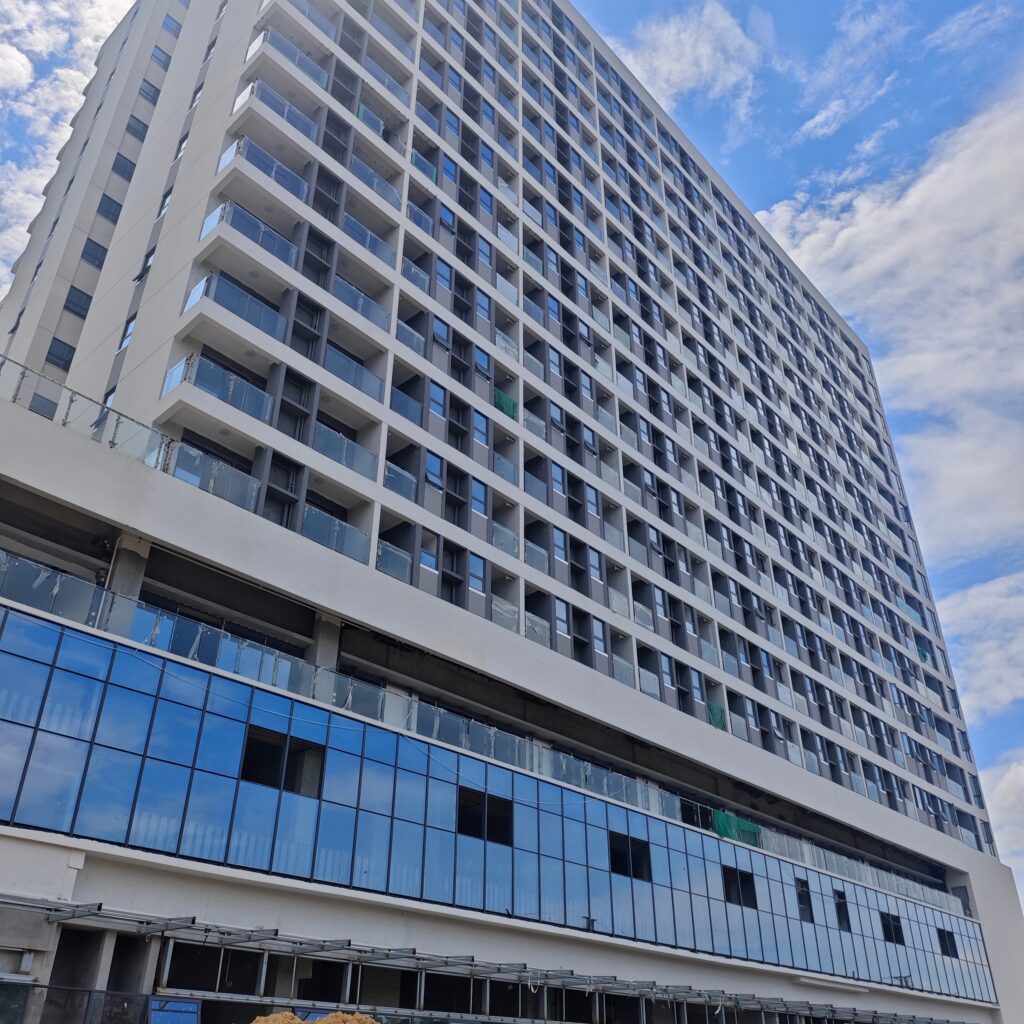
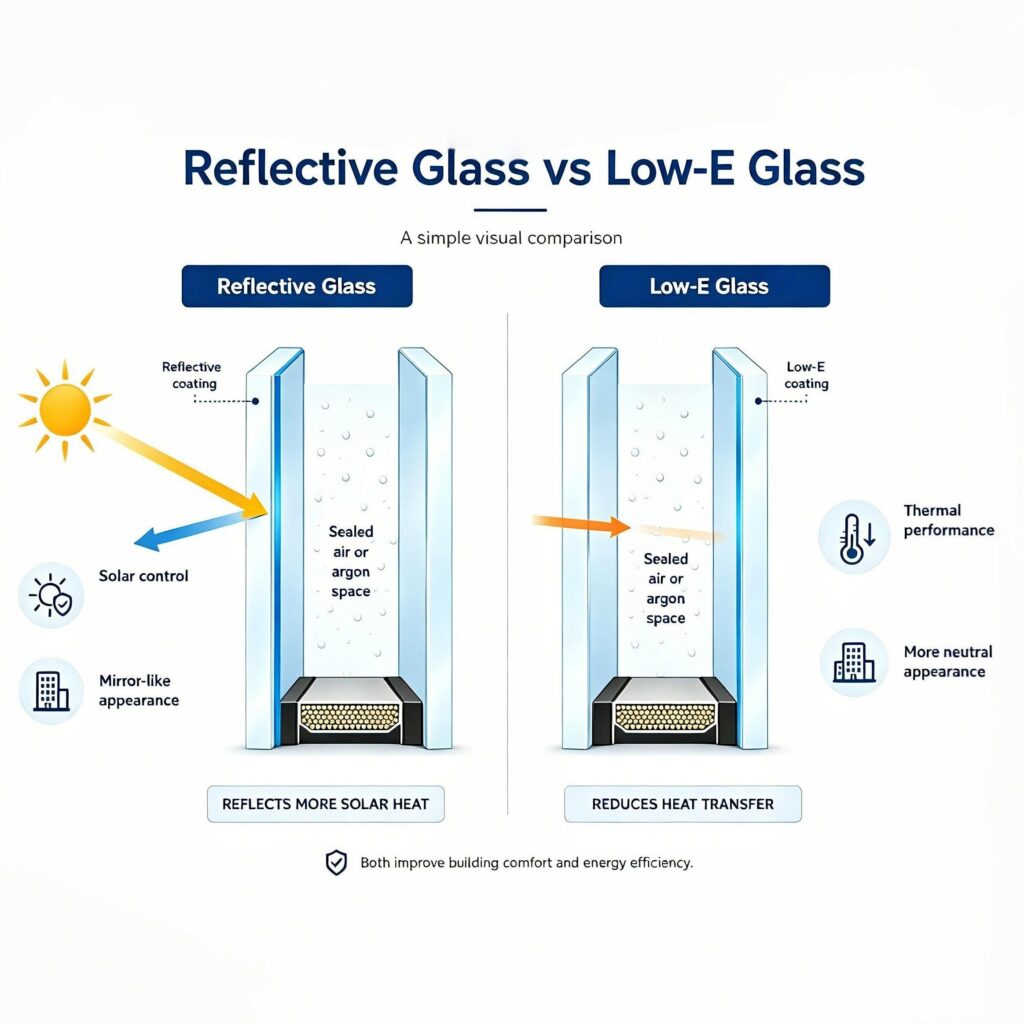
Reflective glass is often selected for solar control, glare reduction, and a mirror-like exterior appearance.
Low-E glass focuses more on reducing heat transfer and improving the thermal performance of the insulating glass unit.
Choosing the right option depends on the project location, building type, appearance goals, and energy performance requirements.
What Is Reflective Glass?
Reflective glass is manufactured with a metallic coating that reflects part of the sunlight before it enters the building. This can help reduce solar heat, glare, and strong daylight, especially for buildings in sunny climates.
As a result, reflective glass can provide several benefits:
- Helps reduce solar heat gain
- Improved occupant comfort in sunny climates
- Reduced glare from direct sunlight
- Enhanced daytime privacy
- A distinctive and uniform exterior appearance
These characteristics make reflective glass a popular choice for projects where solar control and architectural aesthetics are important considerations.
Best for:
Projects that need stronger exterior appearance and solar control.
What Is Low-E Glass?
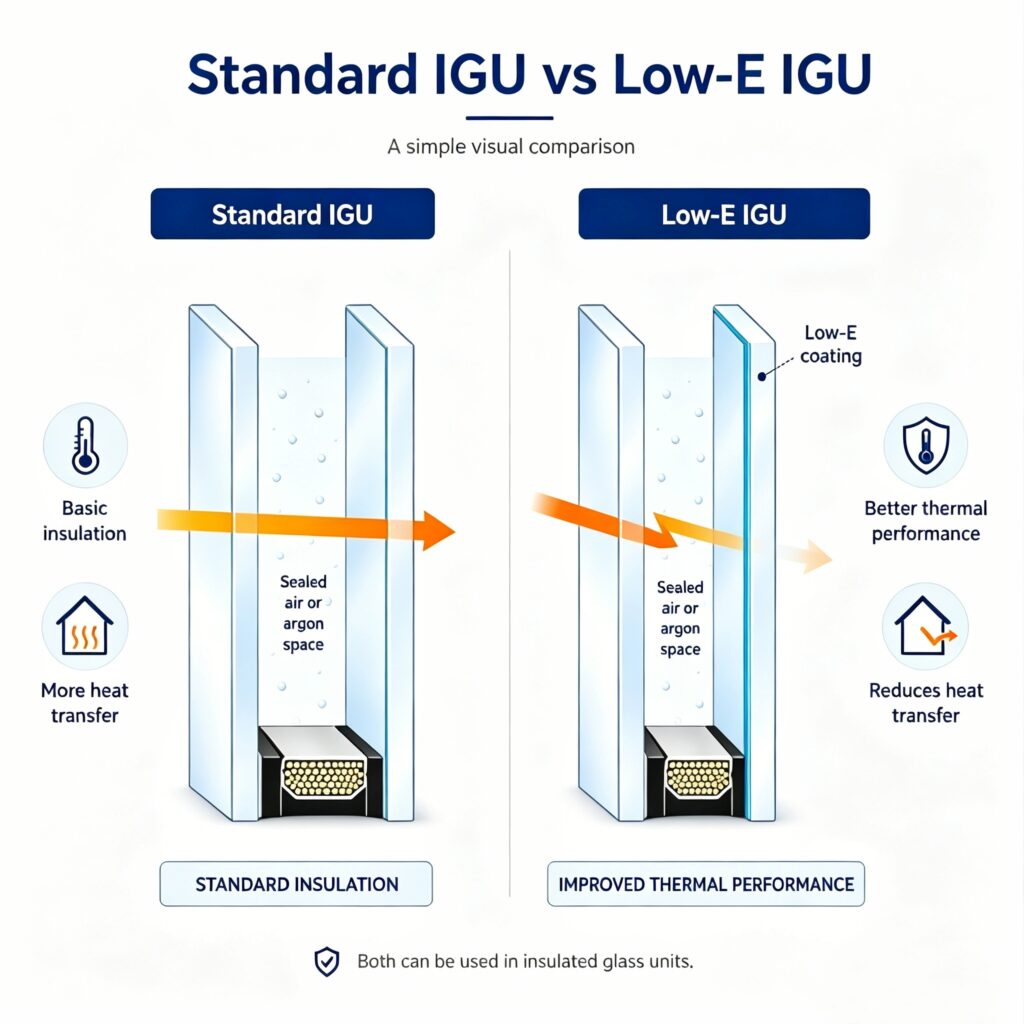
Low-E glass uses a special Low-E coating to help reduce heat transfer through the glass. In a custom glass IGU, the Low-E coating works together with the air space, spacer, and gas filling to improve the overall thermal performance.
Unlike reflective glass, which primarily addresses solar heat coming from outside, Low-E glass focuses on improving the overall thermal performance of the glazing system.
Key benefits of Low-E glass include:
- Improved insulation performance
- Lower U-values
- Reduced heat loss during colder seasons
- Better energy efficiency throughout the year
- Potential reductions in heating and cooling costs
For projects that require better energy performance or improved building-envelope performance, Low-E glass often plays an important role.
Best for:
Projects that need better insulation and year-round energy performance.
Reflective Glass and Low-E Glass: Different Purposes, Different Benefits
Both products can improve building comfort, but they are not used for the same purpose.
Performance Factor
Exterior Appearance
Solar Control
Glare Reduction
Daytime Privacy
Thermal Insulation
U-Value Improvement
Energy Efficiency
Reflective Glass
Strong
Strong
Strong
Good
Moderate
Limited
Moderate
Low-E Glass
Moderate
Good
Limited
Limited
Strong
Strong
Strong
The best choice depends on the project goal.
It is not about saying one glass is always better than the other. It is about matching the glass performance with the real needs of the project.
Why Reflective Glass Is Common in Commercial Buildings
Reflective glass is commonly used in commercial construction because many projects need both exterior appearance and solar control.
In many commercial buildings, there are usually:
- Large glass curtain walls
- Clear façade design requirements
- High exposure to sunlight
- A need to reduce glare
- A desire for a consistent exterior appearance
In these applications, reflective glass can help balance appearance, solar control, and occupant comfort.
This is why reflective glass is often seen in office buildings, hotels, shopping centers, schools, and other commercial projects with large glass areas.
Is Reflective Glass Suitable for Residential Projects?
Reflective glass can also be used in residential buildings, but it should be considered carefully.
Before choosing reflective glass for a home, several points should be checked:
- Indoor brightness may be reduced
- Nighttime privacy may change when indoor lights are on
- HOA rules or local building codes may limit highly reflective glass
- The mirror-like look may not suit every home style
For homeowners, appearance should not be the only factor.
Comfort, natural daylight, privacy, local requirements, and long-term performance should all be considered before making the final glass selection.
How to Choose: Reflective Glass vs. Low-E Glass
When comparing reflective glass vs. Low-E glass, the right choice starts with the real project requirements.
If the priority is exterior appearance, glare reduction, daytime privacy, and solar heat control, reflective glass can be a good option.
If the priority is better insulation, lower U-values, energy efficiency, and reduced heating or cooling costs, Low-E glass is usually the better choice.
In many projects, the best glass is not always the most expensive one. It is the option that fits the project location, design goals, performance requirements, and budget.
Final Thoughts
Reflective glass and Low-E glass both have value, but they are used for different reasons.
Reflective glass is often selected for appearance, solar control, glare reduction, and daytime privacy.
Low-E glass is more important when the project requires better insulation, lower U-values, and stronger energy performance.
Choosing the right glass is not only about how the building looks. It is also about climate, design goals, performance requirements, and budget.
By understanding the strengths of both options, project teams can choose a glass configuration that supports both visual appeal and practical performance.